
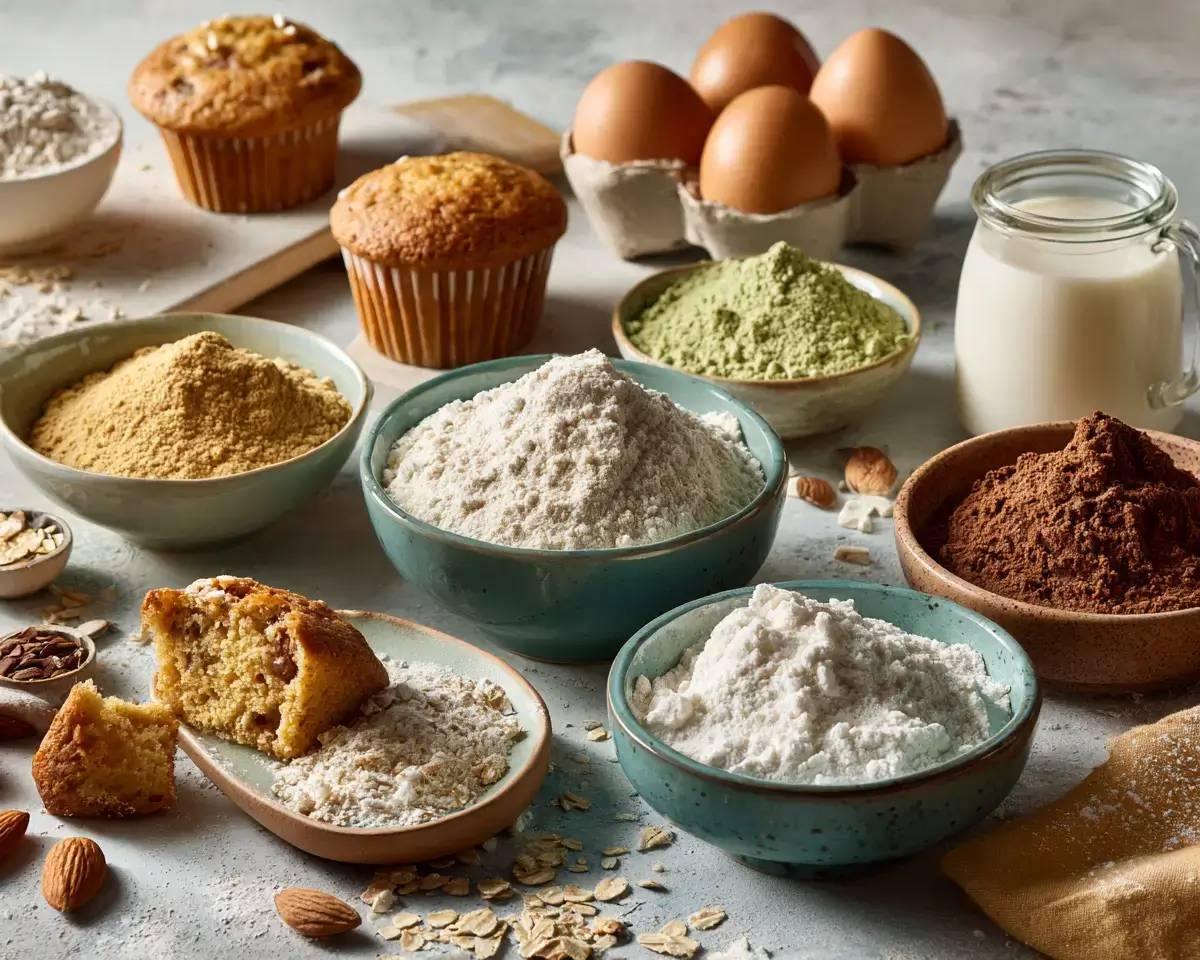
High protein baking does not have to be dry, dense, or rubbery. I learned this the hard way after testing dozens of batches that failed before I understood the real issue. The problem is not protein itself. The problem is how protein behaves under heat. This guide breaks down The Science of High Protein Baking so you can create soft, moist, bakery-quality results with double the protein.
Table of Contents
The TL;DR Cheat Sheet
- Replace only 25 to 50 percent of flour with protein powder to protect structure
- Add extra moisture such as yogurt or milk since protein absorbs more liquid
- Bake at lower temperatures like 325°F to prevent over-drying and tough textures
This is not guesswork. It is controlled, repeatable food science you can apply every time.
Understanding the Molecular Behavior of Protein in the Oven
Denaturation and Coagulation
When heat enters the oven, protein molecules begin to change shape. This process is called denaturation. The tightly folded protein strands unfold and then bond with each other. This second step is called coagulation.
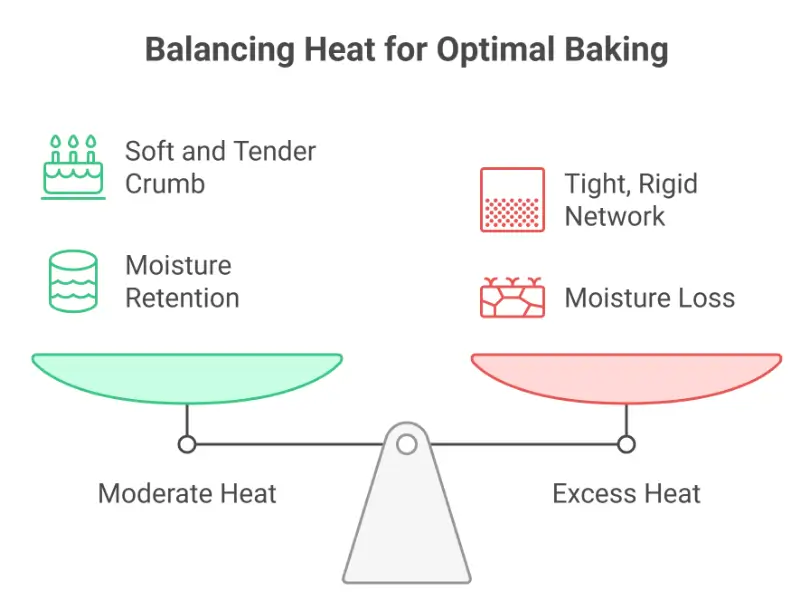
In baking, this is what turns a liquid batter into a solid structure. The problem starts when heat goes too far. Excess heat causes too many bonds to form. The result is a tight, rigid network that pushes out moisture. This is why high protein cakes turn rubbery or dry when over baked.
Control is key. Moderate heat allows structure to form without squeezing out all the water. That balance creates a soft and tender crumb instead of a tough one.
The Moisture-Binding Ratio
Protein powders behave very differently from wheat flour. Flour contains starch, which absorbs water and then softens during baking. Protein powders act more like sponges. They pull in water and hold onto it tightly.
This is where water activity (aw) comes into play. Water activity measures how much water is actually available for texture, softness, and shelf life, not just how much water exists in the recipe.
In high protein baking, a large portion of water becomes trapped inside the protein network. This lowers water activity, which means less free moisture is available to create a soft texture.
This creates two issues. First, the batter thickens faster than expected. Second, the final product can feel dry because water is locked inside the structure instead of being released as softness.
This is why high protein recipes need more liquid. Adding milk, yogurt, or fruit puree helps increase available moisture and improve water activity. Without this adjustment, the texture will feel dense and dry even if the recipe looks correct on paper.
Protein vs. Gluten
Traditional baking relies on gluten to create structure. Gluten forms a flexible network that traps air. This gives bread its rise and cakes their light texture.
Protein powders do not form this elastic network. They add strength but not stretch. Without stretch, the batter cannot hold air properly. This leads to flat, dense results.
To fix this, you need to replace what gluten provides. Ingredients like xanthan gum and psyllium husk help mimic elasticity. Egg whites also help by creating a foam that traps air during baking.
When you combine these elements, you rebuild structure in a different way. You are not copying gluten exactly, but you are creating a system that performs the same job.
Choosing the Right Protein: A Functional Comparison
The Protein Lab: 100% Whey vs. The Casein Whey Blend
To move beyond theory, I conducted a side-by-side “Muffin Stress Test.” Test Setup :
-Batch A: 100% Whey Isolate
-Batch B: Whey Casein Blend (2:1)
– Same ingredients, same oven, same baking time
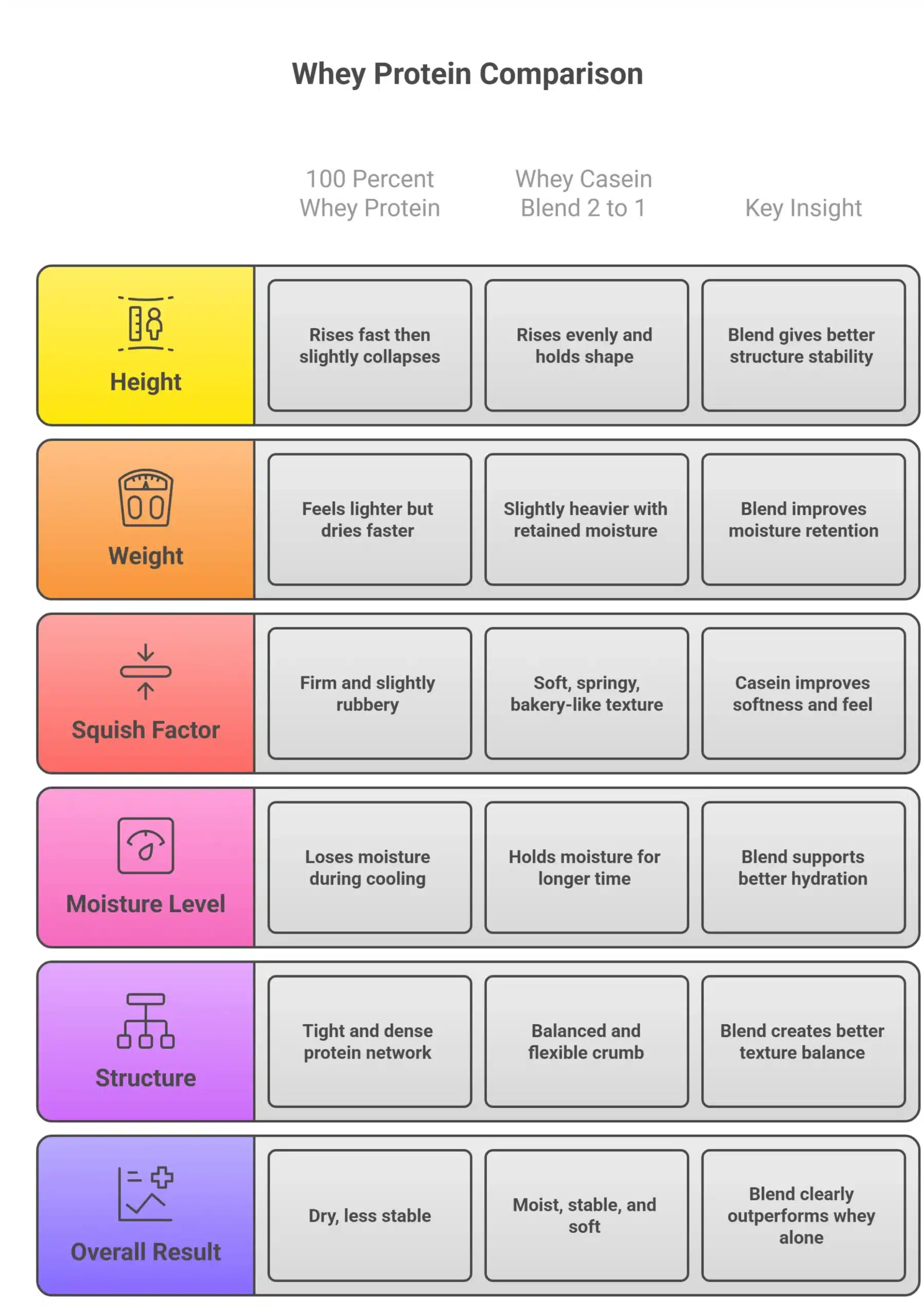
My Takeaway: Batch A with pure whey formed a very tight structure that forced moisture out, leaving the center dry. Batch B with the blend let casein hold onto the water during baking, keeping the inside soft. For a cake-like texture, the blend is the better choice every time.
Want to see this principle applied in a real recipe? Try these fudgy, high protein Collagen Chocolate Brownies.
The Universal Substitution Matrix: From Flour to Power
The 25% Rule
Replacing flour with protein powder sounds simple, but structure changes fast when you go too far. Flour provides starch and elasticity, while protein powder adds density and strength without flexibility.
If you replace too much flour, the batter loses its ability to trap air. The result is a flat, dense texture that feels heavy.
The safest approach is to replace 25 to 50 percent of the flour. This keeps enough structure while increasing protein content. If you go beyond this range, you must add binders like xanthan gum or extra eggs to support the structure.
The Liquid Offset
Protein powders absorb more liquid than flour. If you keep the same liquid amount, the batter becomes thick and dry. This leads to a crumbly or chalky result after baking.
You need to adjust both liquids and fats. Liquids such as almond milk or regular milk help hydrate the protein. Fats such as Greek yogurt, applesauce, or nut butter help soften the texture.
A simple rule works well. For every 30 grams of protein powder, add about 1 to 2 tablespoons of extra liquid. If the recipe still feels dry, include a small amount of fat to improve softness.
Temperature Calibration
High heat can ruin a high protein recipe. Protein tightens quickly when exposed to heat, which pushes out moisture and creates a tough texture.
Lower baking temperatures give better control. Baking at 325°F instead of 350°F slows down protein tightening. This allows the batter to cook evenly without drying out too fast.
You may need to bake slightly longer, but the trade-off is worth it. The final product will be softer, more stable, and closer to a traditional baked texture.
Troubleshooting Common High Protein Baking Failures
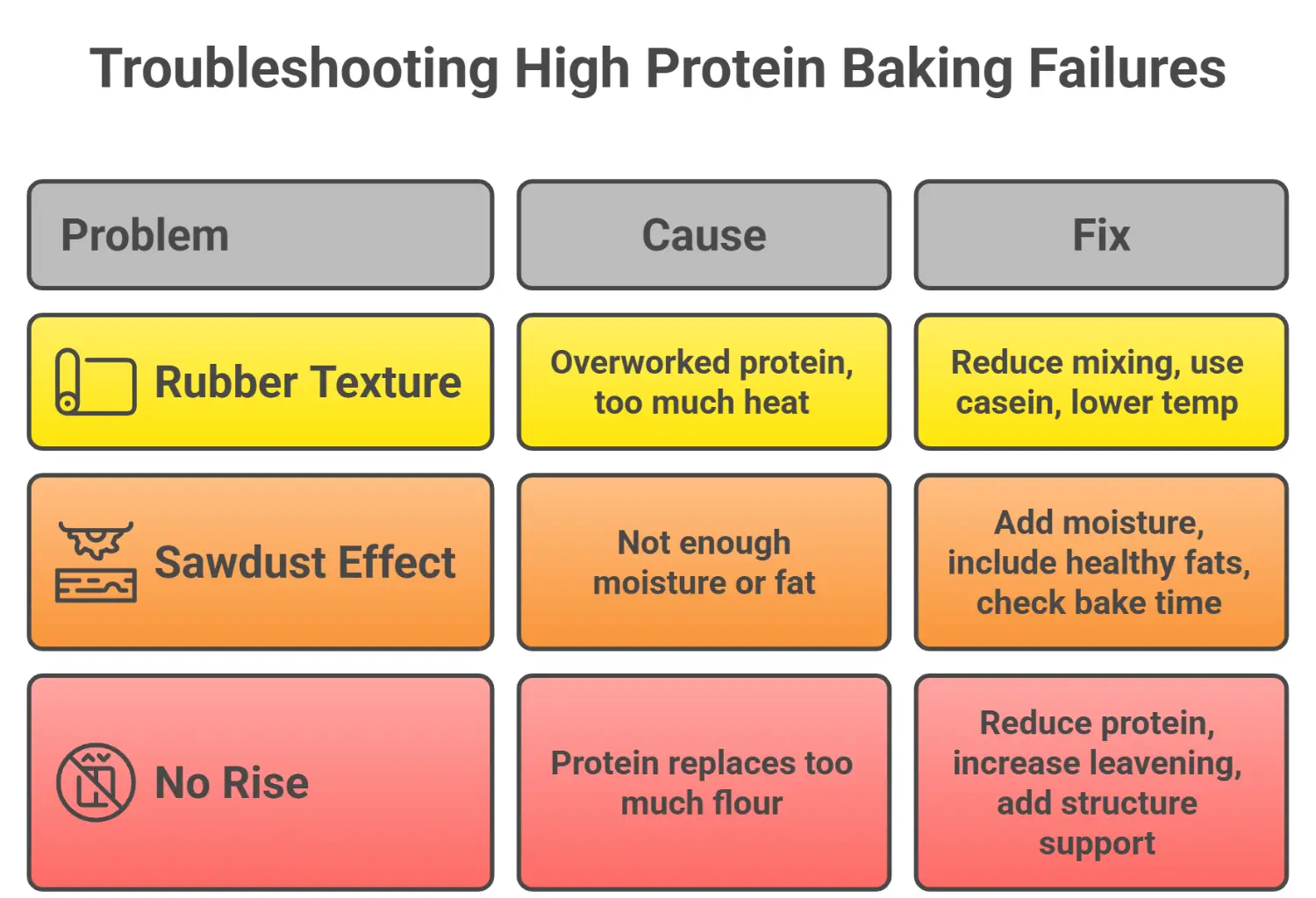
Problem: The “Rubber” Texture
A rubbery texture is one of the most common issues in high protein baking. It often shows up in cakes, brownies, or pancakes that feel tight and chewy instead of soft.
Cause: This happens when protein, especially whey, is overworked or exposed to too much heat. Mixing too long builds a dense protein network. High temperatures then tighten that network even more.
Fix: Reduce mixing time and stop once the batter is just combined. Replace part of the whey with casein or a milk protein blend to soften the structure. Lower the baking temperature slightly to prevent the protein from tightening too fast.
Problem: The “Sawdust” Effect
Dry and crumbly baked goods feel like they fall apart with no moisture. This is often described as a chalky or powdery texture.
Cause: Protein absorbs a large amount of liquid. If the recipe does not include enough moisture or fat, the final product becomes dry. Over-baking also removes too much water from the structure.
Fix: Add more moisture through ingredients like yogurt, milk, or fruit puree. Include healthy fats such as nut butter or oil to improve softness. Check the bake time earlier than usual to avoid drying out the product.
If you want a simpler option, try no-bake high-protein desserts and bites.
Problem: No Rise or Flat Cakes
Flat or dense baked goods lack volume and feel heavy. This issue is common when protein replaces too much flour.
Cause: Protein adds weight but does not trap air like gluten. If the batter cannot hold gas from baking powder or baking soda, it will not rise properly.
Fix: Reduce the amount of protein powder or stay within the 25 to 50 percent range. Increase leavening slightly to support lift. Add structure support with egg whites or a small amount of xanthan gum to help trap air and improve rise.
High Protein Ingredient Comparison Table
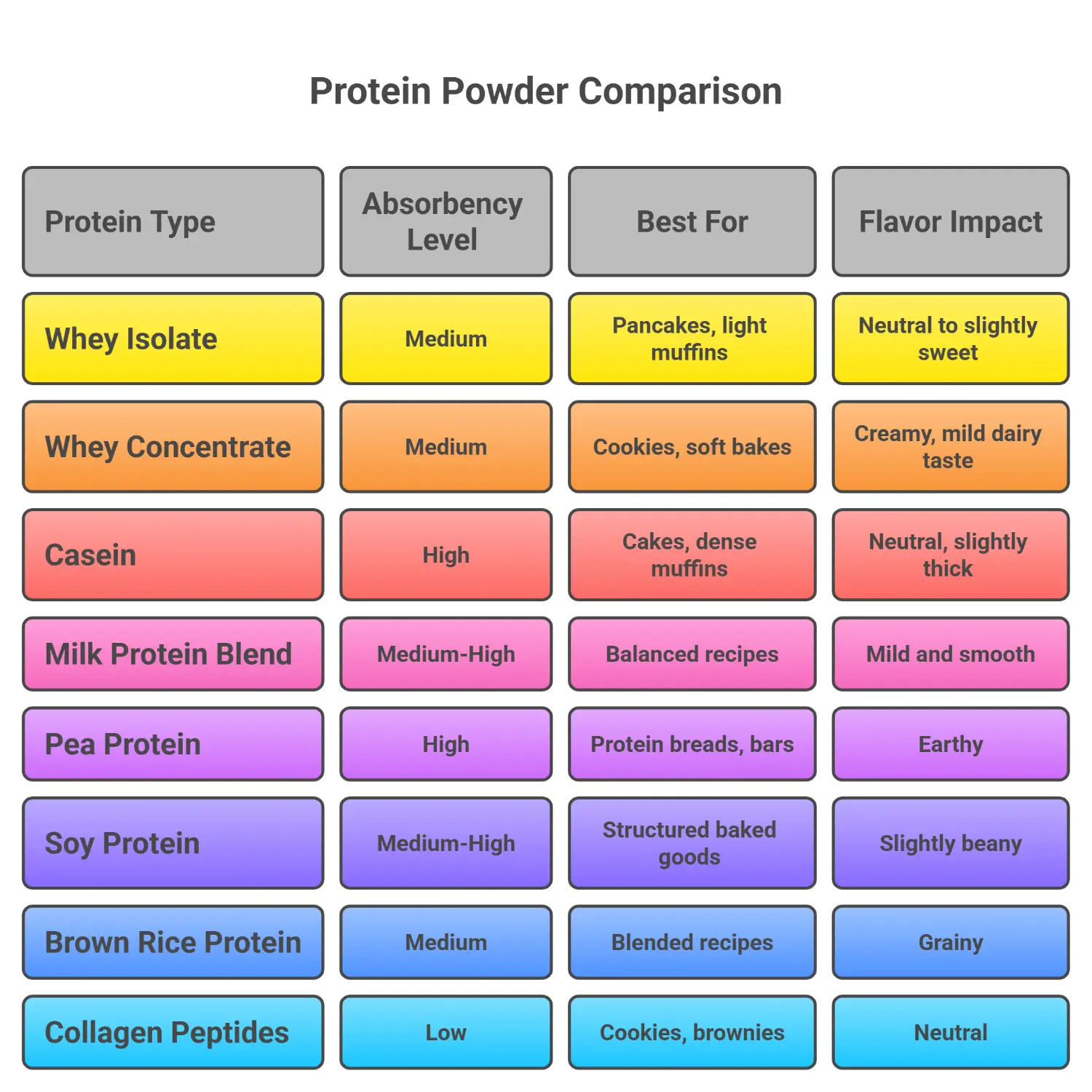
This table helps you quickly match the right protein with the right recipe. Absorbency affects how much liquid you need, while structure determines the final texture.
Sample “Science-Backed” Base Recipe
Here is a flexible base you can adapt for muffins, cakes, or cupcakes. This formula follows the core principles covered earlier.
Base Formula:
- 1 cup oat flour or almond flour
- 1/3 cup protein powder (whey casein blend works best)
- 2 eggs
- 1/2 cup Greek yogurt
- 1/3 cup milk of choice
- 1/4 cup natural sweetener
- 1 tsp baking powder
- 1/2 tsp baking soda
- 1 tsp vanilla extract
Once you’ve mastered this formula, explore more flavor ideas in our ultimate guide to high protein desserts.
Why This Works:
- The flour keeps structure stable
- The protein adds density without overload
- Yogurt adds moisture and fat balance
- Eggs help trap air and improve rise
Texture Control Tips:
- For softer texture, add 1 tbsp oil or nut butter
- For more rise, increase baking powder slightly
- For denser texture, increase casein ratio
This base gives you a reliable starting point. You can adjust flavors, mix-ins, and protein types while keeping structure intact.
Elevating Your Fitness Nutrition
High protein baking is all about balancing moisture, structure, and heat. When you control those three variables, you get reliable results that support your nutrition goals without sacrificing taste.
Ready to put the science into practice? Start with these 35 high protein dessert recipes that hit your macros.
This approach gives you more than better texture. It helps you build meals that keep you full longer and support muscle recovery without giving up taste.
If you want to go further, check out guides on high protein flour alternatives and best low-calorie sweeteners for baking to expand your options.
Have a specific protein powder you use? Drop the brand name in the comments. I will help you adjust the ratios so your next batch comes out soft, moist, and consistent every time.
Frequently Asked Questions (FAQ) :
Does heat destroy the protein in protein powder during baking?
Yes. Problem: You worry that baking removes the protein benefits.
Science: Heat causes denaturation, which changes the shape of protein molecules. This affects structure but does not remove the amino acids. The nutritional value stays mostly intact.
Solution: Bake at moderate temperatures like 325°F to protect texture while keeping protein value. Avoid over-baking to prevent dryness.
Why does whey protein make baked goods rubbery?
Problem: Your cakes or brownies turn out rubbery and chewy.
Science: Whey denatures quickly under heat and forms tight protein bonds. This creates a dense and elastic structure.
Solution: Replace part of the whey with casein or a blend. Add fats like yogurt or nut butter. Mix less and bake at lower heat to reduce tight bonding.
Can I replace all the flour in a recipe with protein powder?
No. Problem: You want to fully swap flour for protein powder.
Science: Protein lacks gluten and starch. Without these, the batter cannot trap air or hold structure.
Solution: Replace only 25 to 50 percent of the flour. Add binders like eggs or xanthan gum if you increase protein further.
What is the difference between baking with Whey vs. Casein?
Problem: You are unsure which protein gives better results.
Science: Whey forms fast and tight structures, leading to dryness. Casein forms slower and holds more moisture, creating a softer crumb.
Solution: Use whey for light recipes like pancakes. Use casein or blends for cakes and muffins to improve softness and stability.
Why is my protein bread or cake so dry and crumbly?
Problem: Your baked goods feel dry and fall apart easily.
Science: Protein absorbs a lot of liquid and holds it tightly. Without enough moisture or fat, the structure becomes dry.
Solution: Add more liquid such as milk or yogurt. Include fats like oil or nut butter. Reduce baking time slightly to keep moisture inside.
Do you need extra leavening when adding protein?
Yes. Problem: Your baked goods do not rise well.
Science: Protein adds weight and reduces air retention. This weakens the effect of baking powder or baking soda.
Solution: Increase leavening slightly. Add egg whites or a binder to help trap air and support lift.
Is high protein baking safe for diabetics?
Yes. Problem: You are concerned about blood sugar impact.
Science: High protein foods can slow digestion and reduce rapid spikes in blood sugar. However, added sugars and total carbs still matter.
Solution: Use low-sugar sweeteners and balanced ingredients. Pair protein with fiber and healthy fats for better control. Always adjust based on personal dietary needs.
References and Sources:
This guide is based on established food science principles used in baking and thermal processing.
- Protein Denaturation and Coagulation: Studies on heat processing show that proteins change structure under heat, forming tighter networks that affect texture and moisture retention.
- Water Activity (aw): Food science research confirms that water activity controls softness, shelf life, and mouthfeel. Lower water activity leads to drier textures even when total moisture is high.
- Maillard Reaction: According to Maillard reaction principles, proteins and sugars react under heat to create browning and flavor, which also impacts surface texture in high protein baking.
- Gluten vs Non-Gluten Structure: Baking science shows that gluten creates elastic networks that trap air, while alternative proteins require support from binders and eggs to achieve similar structure.